
Embrace Weird | 1 Peter 3:1-12 Notes

Sermon Summary
We live in a world obsessed with externals. Social media magnifies this as we compare our messy “behind the scenes” to others’ polished highlight reels. But God doesn’t value what we value; he looks past the filters and into the heart.
1/ The Godly Character of Christ (1 Peter 2:21–25)
Before Peter addresses wives or husbands, he anchors everything in Christ. Jesus suffered unjustly, did not retaliate, and entrusted himself to “him who judges justly.” More than an inspiring example, his suffering is our salvation: “He himself bore our sins in his body on the tree… by his wounds you have been healed.”
Christ’s atoning death reconciles us to God and then becomes the pattern for how we respond to hardship, hostility and unfair treatment. Any call to godliness in marriage or community flows first from who Jesus is and what he has done.
2/ The Godly Character of Women (1 Peter 3:1–6)
Peter speaks first to wives, especially those married to unbelieving husbands. Their respectful and pure conduct may “win” their husbands without many words. Crucially, this text has been misused to justify domestic abuse; it must not be. Peter is not commanding women to endure violence. Wives are not slaves, and the hardship in view is spiritual hostility, not physical danger.
Peter contrasts outward adornment—hair, jewellery, clothes—with “the hidden person of the heart,” the imperishable beauty of a gentle and quiet spirit, which is “very precious in God’s sight.” This is a word for all Christian women: to resist the pressure of worldly standards and cultivate inner beauty shaped by hope in God.
Men, too, must learn to value and celebrate this inner adornment rather than measuring women by external, sexualised ideals.
3/ The Godly Character of Men (1 Peter 3:7)
Husbands are told to live with their wives “in an understanding way,” showing honour to them as the weaker vessel—typically physically and often socially more vulnerable—while fully equal as “heirs with you of the grace of life.”
A Christian wife is not property but a co-heir of eternal life, bought with the same blood and loved with the same love. So serious is this call that a husband’s failure to honour his wife can hinder his prayers. Spiritual usefulness and marital godliness are deeply connected.
4/ The Godly Character of All God’s People (1 Peter 3:8–12)
Peter then widens his focus: “Finally, all of you…” Every believer is called to unity of mind, sympathy, brotherly love, tender hearts and humble minds. Instead of repaying evil for evil, we bless—even our enemies—entrusting ourselves to the God whose eyes are on the righteous and whose ears are open to their prayers.
Conclusion
This “embrace weird” life—Christlike character in a hostile world—was embodied by early Christians like Perpetua and Felicity, two women from very different backgrounds, united as co-heirs of grace and faithful to Christ unto death. Their story invites us to pursue the same quiet, costly, inner beauty that God calls precious.
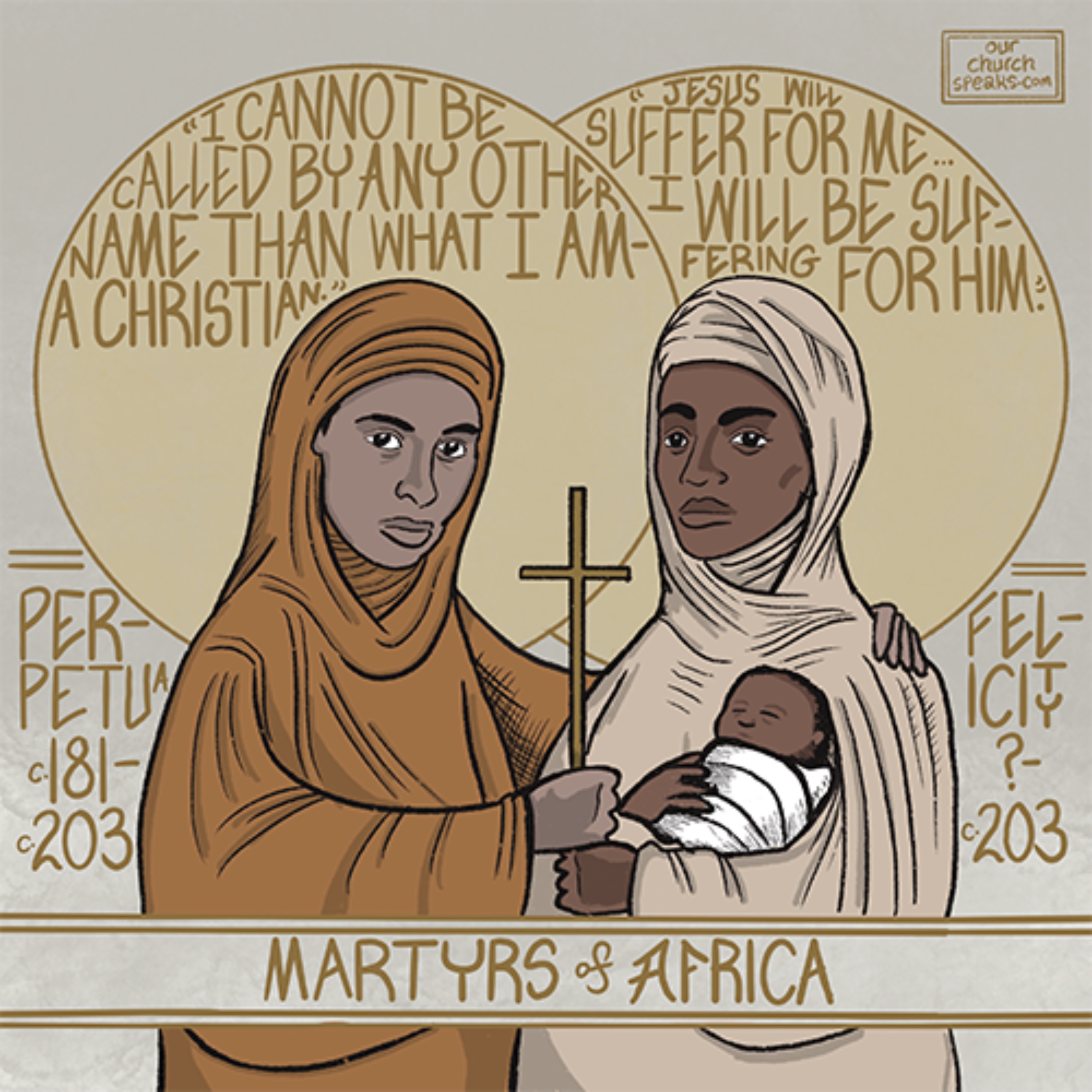
From ourchurchspeaks.com
HOME GROUP QUESTIONS
KICKOFF
What stood out to you from the sermon, and what questions did it raise?
Prayer for our time in God’s word.
BIG IDEA: ADORN THE SOUL
1 Peter 3 calls Christians to “embrace weird” by valuing godly character over outward appearance. Rooted in Christ’s suffering and atoning death (2:21–25), Peter urges wives to cultivate inner beauty and respectful conduct, especially with unbelieving husbands, while clearly not endorsing abuse. Husbands must live considerately, honouring wives as co-heirs of grace, or risk hindering their prayers. Finally, all believers are called to unity, sympathy, humble love, and blessing rather than retaliation, trusting in the God who sees and hears.
Read 1 Peter 2:21-3:12
- What strikes you from the passage?
- How does Jesus’ godly, sin-bearing character in 1 Peter 2:21–25 form the foundation for the countercultural relationship instructions that follow in 1 Peter 3:1–7?
Re-Read 1 Peter 3:1-6
- What contrasts does Peter make between outward adornment and “the hidden person of the heart”? How does he describe what is “very precious” in God’s sight?
- In vv1-2 Peter focuses on Christian wives with unbelieving husbands. Why is their “respectful and pure conduct” so significant in that situation, and how might their behaviour “win” their husbands “without a word”? (See below for notes on abuse)
- In a culture fixated on appearance and status, what might it look like for Christian women—and men—to intentionally “adorn” the inner life today, and to honour that inner beauty in others?
Re-Read 1 Peter 3:7
Depending on your group, some of these questions may be for personal reflection. For those who are unmarried, what godly principles here should shape how men see, treat, and speak about women in general?
- “Likewise, husbands…” – Jesus’ way of love sets the pattern. How does Christ’s example in 2:21–25 confront any selfish or harsh patterns in how you relate to your wife (or women generally)?
- “live with your wives in an understanding way” – What would it practically look like this week to seek to really know and understand your wife’s fears, pressures, and joys—and adjust your behaviour accordingly?
- “showing honour to the woman as the weaker vessel, since they are heirs with you of the grace of life” – How can you tangibly honour the women in your life (especially your wife if married) as co‑heirs of the grace of life—equal in dignity and worth before God—in the way you speak, decide, serve, and relate?
- “so that your prayers may not be hindered” – If God linked your prayer effectiveness to how you treat your wife, what would need to change immediately in your heart, habits, and spiritual leadership at home?
Re-Read 1 Peter 3:8-12
- What are some tangible ways that our home group and church can grow in godly character from 3:8–9 (unity, sympathy, love, tenderness, humility, blessing)?
- How does knowing God sees and hears (3:10–12) motivate you to keep showing godly character when you’re hurt, ignored, or mistreated?
Prayer: In response to the passage.
Vision Prayer: Father God, by your grace, enable our church to be a city of refuge within the city of Brisbane. Empower me this week, by your Spirit, to offer one person the refuge, security, and hope found in Christ Jesus. Amen.
—
NOTE ON 1 PETER 3:1, 5-6 FROM SYDNEY DIOCESE SAFE MINISTRY
Wrong meaning: Endure abuse to show your husband what Jesus is like.
In the same way that Christ endured suffering (1 Peter 2:21-23), and slaves are to endure mistreatment from unjust masters (2:20), a wife should also endure abuse at the hands of her husband. A wife should be like Jesus. If her husband beats her, she should suffer the beating quietly. She should not be afraid. This will show her husband what Jesus is like.
Correct meaning: Respect your husband, even if he is hostile to your faith.
1 Peter 3 continues the argument of 1 Peter 2. “In the same way” (3:1) means that Peter is continuing his discussion of respect. Out of respect, slaves should submit to their masters (2:18). Out of respect, wives should submit to their husbands (3:1). Out of respect, husbands should be considerate of their wives (3:7).
However, it is important to understand the difference between the examples given in 1 Peter 2 and 1 Peter 3. Peter told slaves to suffer beatings patiently, like Jesus did. But he does not tell wives to suffer beatings. Wives are not slaves. Even the laws of the Romans did not permit wives to be beaten. The hardship the wife must endure in 1 Peter 3 is the hardship of being married to an unbelieving husband, not to an abusive husband. The passage does not teach wives to submit to domestic abuse.
If anything in this passage or discussion raises concerns about current or past abuse, please don’t carry that alone. Speak with your leader or a trusted Christian, and seek help.