
Embrace Weird | 1 Peter 3:13-22 Notes

Makarios: A Different Kind of Blessed
The Greek word Makarios describes deep, untouchable joy — a happiness not dependent on circumstances. The ancients used it for the “Happy Isle” of Cyprus, so rich and beautiful you’d never need to leave. In the New Testament, Makarios is translated “blessed” — the word Jesus uses on repeat in the Beatitudes.
Peter uses the same word in 1 Peter 3: “Even if you should suffer for righteousness’ sake, you will be blessed.” That’s not how we use #blessed. But knowing Jesus enables us to see even unjust suffering as a strange, real blessing.
1/ Embrace the blessing of unjust suffering (1 Peter 3:13-17)
Peter writes to Christians scattered as exiles, facing hostility. He calls them to be “zealous for what is good” — and warns that sometimes that zeal will bring opposition precisely because they belong to Jesus.
When that happens: “have no fear of them, nor be troubled, but in your hearts honour Christ the Lord as holy.” When Christ is set apart as holy in our hearts, fear of people loses its grip. Our allegiance is to him.
We’re to be “always prepared to make a defence to anyone who asks for a reason for the hope that is in you” — but with “gentleness and respect.” Sometimes Christians suffer not because we follow Jesus, but because we’ve been unkind or arrogant. Peter urges good conscience and good behaviour, so that when we are slandered, it’s not because we’ve been jerks, but because people reject Christ.
2/ Because of Christ’s victory over unjust suffering (1 Peter 3:18-22)
We can only embrace unjust suffering as a blessing because of what Christ has already done for us in the gospel events. 1 Peter 3:18 is a brilliant gospel summary:
“For Christ also suffered once for sins, the righteous for the unrighteous, that he might bring us to God, being put to death in the flesh but made alive in the spirit…” (ESV)
At the cross, Jesus paid the penalty for sin (penal), died in our place (substitutionary — the righteous for the unrighteous), and restored us to relationship with God (atonement — “at-one-ment”). Freely. By grace. Not by our efforts. He rose, was vindicated, and now sits at the right hand of God. His victory is our victory. His vindication is our vindication. Believers never move on from this — we keep hearing and believing this gospel on repeat.
The blessing lived: twenty-one martyrs on a Libyan beach
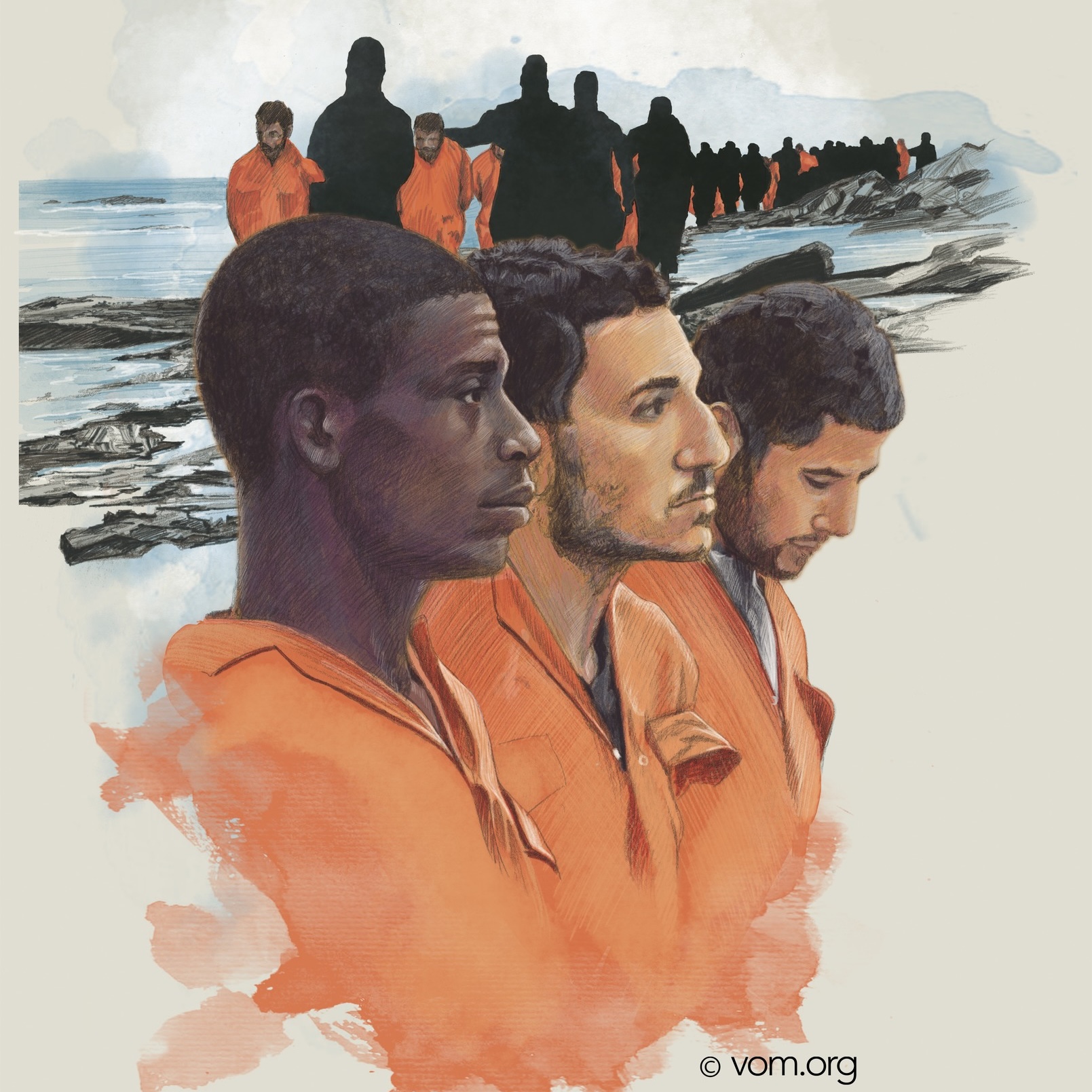
In 2015, twenty-one men — twenty Egyptian Christians and one from Ghana — were kidnapped in Libya and pressured for weeks to deny Christ. All refused. They were marched onto a beach in orange overalls and executed.
Their church’s response: “We love you… Death is a vanquished enemy for us, vanquished by the power of the Christ in his resurrection.”
That is 1 Peter lived out. The same call comes to us: honour Christ as holy, keep doing good, be ready to speak of your hope, and entrust yourself to the One who has already won.
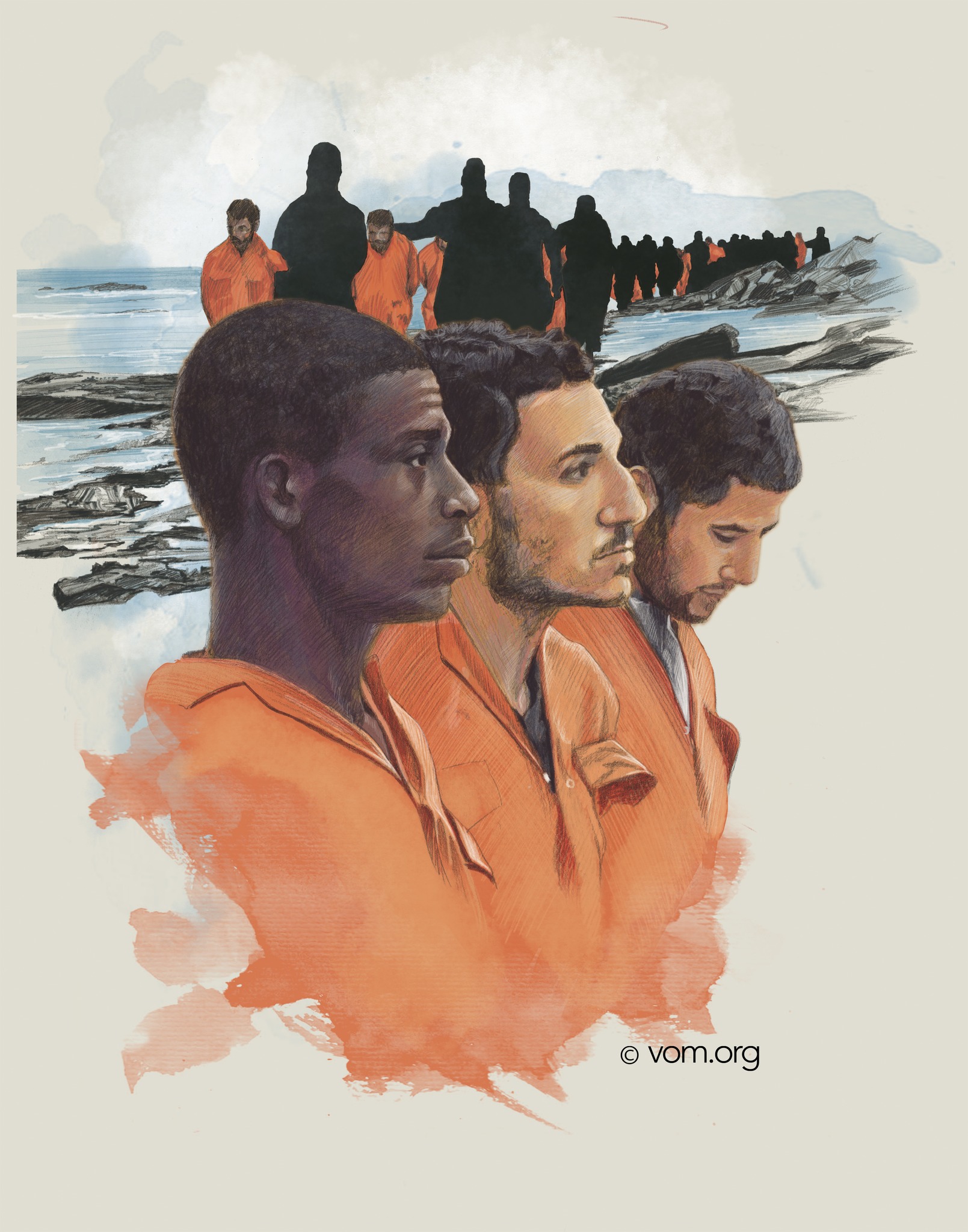
21 Martyrs – image from vom.org
HOME GROUP QUESTIONS
[Download 1 Peter 3:13-22 Study PDF]
KICKOFF
What stood out to you from the sermon, and what questions did it raise?
Pray for our time in God’s word.
BIG IDEA: IT IS BETTER TO SUFFER
1 Peter 3:13-22 teaches that Christians can embrace the blessing of unjust suffering — honouring Christ as holy, doing good, and gently explaining their hope — because of Christ’s victory over unjust suffering: his penal, substitutionary, atoning death and victorious resurrection, guaranteeing their final vindication.
Read 1 Peter 3:13-22
- What strikes you from the passage?
- What repeated ideas or contrasts do you notice in the passage?
From 1 Peter 3:13-17
- What are the key things Peter tells Christians to do and not do in these verses?
- How do these verses show the difference between suffering as a Christian and suffering for doing wrong? What do they teach about the mindset we’re meant to have when we face opposition for our faith?
- In your life right now, where might you need to (a) keep doing good for Jesus and (b) be ready to explain your hope “with gentleness and respect”?
From 1 Peter 3:18
- What main gospel truths does verse 18 teach? Put it in your own words.
- How does this verse show that Jesus took our place and our penalty (penal substitutionary atonement), and why is that such good news?
- How does verse 18 help to equip you to do what verse 15 says?
From 1 Peter 3:19-22
Scott McKnight writes that, however we understand the details of these verses, we should “see this passage in light of its context … the overall theme of vindication. Jesus was righteous and suffered for the unrighteous. God vindicated him by exalting him to his right hand. The churches of Peter need to know that if they remain faithful, like Jesus, they too will be vindicated.”
- In your own words, how do vv19–22 show Jesus’ vindication and victory after his suffering (even if some details are hard to understand)?
- How does knowing that Christ has already been vindicated, and that we will share in his vindication, help you to “embrace the blessing of unjust suffering” in real situations you have faced or may face in the future?
Prayer: In response to the passage.
Vision Prayer: Father God, by your grace, enable our church to be a city of refuge within the city of Brisbane. Empower me this week, by your Spirit, to offer one person the refuge, security, and hope found in Christ Jesus. Amen.